9th October 2026
Sourcing Comfort Shoes: The Retailer’s Guide to Essential Features
Retail customers describe a shoe as comfortable during a commute, hard-floor shift, school run, or market walk. As a retailer, you need features you can specify, sample, inspect, and repeat. Use this checklist for footbed materials and carton planning.
What Should You Check First When Sourcing Comfort Shoes?
Start with the wearer’s routine and your sales channel. A home slipper, a work slide, and a children’s boot need different comfort evidence. Write the use case, target price, size range, color plan, and shipping season into the brief before you compare factories.
Match the Shoe to the Wearing Scene
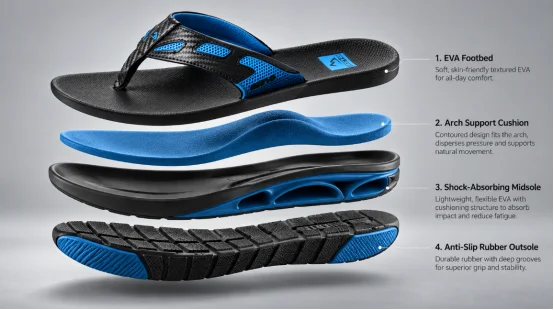
For indoor and summer lines, EVA is light, washable, and quick to dry. A thickened EVA sole cushions repeated steps at home or work. For children’s fall and winter shoes, a foam midsole with a rubber outsole adds shock absorption and grip on tile or grass. Open-toe sandals need a smooth lining and an easy closure.
Check Fit Controls and Appearance
Adjustable double straps, hook-and-loop closures, and laces let one style serve more foot shapes. A wide round toe gives growing toes room, while an elastic ankle collar reduces rubbing. Ask the supplier for actual foot-length measurements and a size chart. A product page that lists EU 36–43 or EU 21–32 is a starting point; your sample must confirm the inside length and width.
Which Comfort Features Matter in a Wholesale Comfort Shoes Range?
Comfort sells through repeat wear, so each feature should have a clear job. Ask for material names, thickness, test samples, and care instructions. A short feature sheet helps your sales team answer questions and keeps medical claims out.
Build Cushioning from the Ground Up
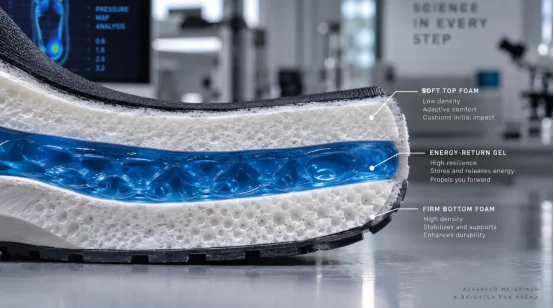
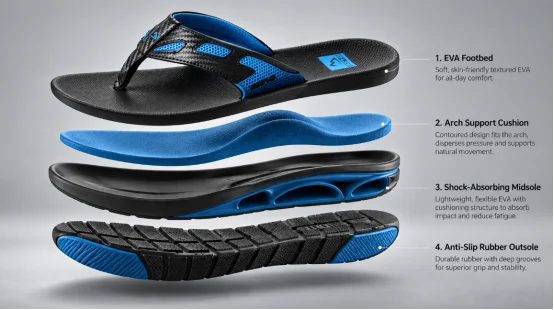
Look at the footbed, midsole, and outsole together. A soft EVA or foam footbed absorbs everyday impact. Rubber or textured EVA underfoot adds grip and wear resistance.
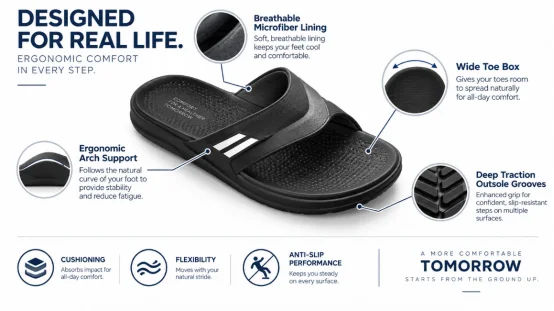
In flat sandals, a rubber-padded arch area can support long commutes and shopping trips. For platform slides, a thicker sole can add cushioning, but check bend points so the shoe still flexes during a normal step.
Control Heat, Moisture, and Skin Contact
Cotton fabric, mesh, and microfiber linings move moisture away from the foot. Quick-drying EVA suits poolside, garden, and beach use. Plush or faux-fur uppers fit cold-season indoor lines when the pile stays attached. Ask for a rub test on the lining and a wipe-clean sample on the upper. These checks predict returns better than a studio photo.
Specify Grip and Daily Durability
Deep outsole textures create traction on wet workshop floors and smooth tiles. Review the tread depth, edge finish, and bonding around the upper. For children’s shoes, press and twist the sole by hand, then inspect the toe and heel after repeated flexing.
For rhinestone or decorated styles, check adhesive coverage and pull resistance before approving a bulk run.
How Do You Evaluate a Shoe Supplier Before a Trial Order?
Supplier screening works best as a short evidence trail. You need a named product, a confirmed specification, a physical sample, and a written inspection point before money moves. This process gives small trial orders a defined purpose.
Confirm the Technical Sheet and MOQ
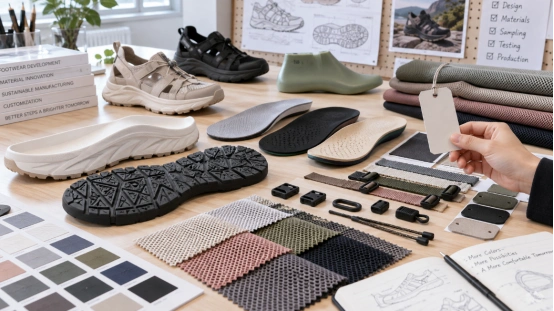
Record upper, lining, midsole, outsole, closure, size range, color codes, logo position, packing method, and lead time. Ask whether the factory accepts mixed sizes or mixed colors. A flexible MOQ can help you test a seasonal line while keeping inventory within your cash plan. Put every change into the order sheet, including strap width, sole thickness, and carton marks.
Approve a Pre-Production Sample
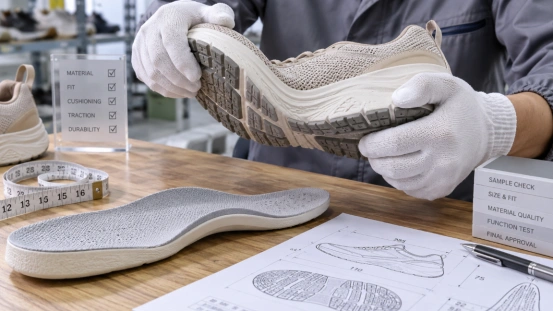
Use the sample to check strap pressure, toe room, arch feel, sole texture, color, logo placement, and packaging. For a children’s boot, check ankle wrap, lace adjustment, collar softness, and toe box with a real size reference. Sign off on one version and keep dated photos.
Use a Written Quality Inspection
Before shipment, inspect size assortments, stitching, glue lines, outsole grip, surface marks, labels, hangtags, and carton counts. A sourcing partner can inspect goods even when another factory makes them. Request a report with photos and defect quantities, then set the correction rule before loading.
How Can You Reduce Landed Cost While Keeping Comfort?
Landed cost includes the shoe, packaging, inspection, inland movement, freight, and customs work. Better planning keeps those parts visible while the comfort specification stays fixed.
Plan Packing and Consolidation Early
Reinforced moisture-proof cartons protect shoes during sea transport. OPP bags, non-woven bags, and printed shoe boxes suit different price points. With several suppliers, warehouse consolidation and mixed-container loading combine styles into one shipment. Record carton quantity, CBM, and marks before loading.
Choose Transport for the Order Shape
Sea freight fits larger seasonal orders. Sea-rail intermodal service can suit inland destinations with a tighter delivery window. Ask for two written options based on your destination port, volume, and ready date. Keep the freight plan beside the product sheet so a late color change does not create a surprise shipment split.
Where Can a Footwear Sourcing Agent Add Practical Value?
A local sourcing partner can connect product details with factory work, which matters when your team is buying several styles at once. The useful service is specific: matching a factory to the brief, tracking production, checking goods, and closing the export paperwork.
Use XINSA for Detail Control Across the Order
Through XINSA’s sourcing service, you can submit sizes, colors, logos, packaging, and target markets in one brief. The team matches footwear factories, arranges samples, records order details, follows production, and performs pre-shipment checks.
Its footwear range covers men’s, women’s, and kids’ slides, sandals, slippers, and boots, with support for strap changes, sole thickness, mixed-size packing, printed or embossed logos, and private-label cartons. You can also review the footwear product range when building a test assortment.
Keep the First Order Easy to Audit
Ask for a formal quotation, sample photos, an inspection checklist, and a shipping plan. Free warehouse storage and consolidation can help when goods come from different factories. The goal is a clean record that lets you reorder the same comfort details next season.
FAQ
Q1: Which sole material is best for wholesale comfort shoes?
A: EVA feels remarkably light. It cushions well and dries quickly. Conversely, rubber brings solid grip. It also resists heavy wear. Pick a blend matching the specific wearing scene. Then, verify it with a physical sample.
Q2: How to ensure adjustable straps fit diverse customers?
A: Try them on narrow, regular, and wide feet. Inspect the hook-and-loop grip closely. Check the edge softness. Feel for odd pressure after a full fitting. Finally, log the usable adjustment range on your product sheet.
Q3: Do you need a pre-production sample for a private-label shoe?
A: Definitely. Use it to confidently confirm fit, color, and sole texture. Also, evaluate the logo effect, hangtags, and carton artwork before bulk production begins.
Q4: Can a retailer mix sizes and colors per order?
A: Many factories gladly permit mixed-size or mixed-color packing. Just finalize the exact ratio before manufacturing starts. List this specific ratio, carton count, and labels inside the signed order sheet.
Q5: What must a footwear quality inspection check?
A: Review core materials and size assortment. Scrutinize stitching, bonding, and outsole grip. Verify logos, labels, packaging, carton marks, and quantity. Clear photo records and exact defect counts make release decisions highly straightforward.