18th September 2026
China Fashion Footwear Sourcing Guide for Global Importers
Sourcing shoes from China often starts with a screenshot, a target price and a rough delivery month. The hard part comes later. You need the right materials, wearable sizes, steady quality and paperwork that will not stall at the port. This China footwear sourcing guide turns those concerns into a working buying process.
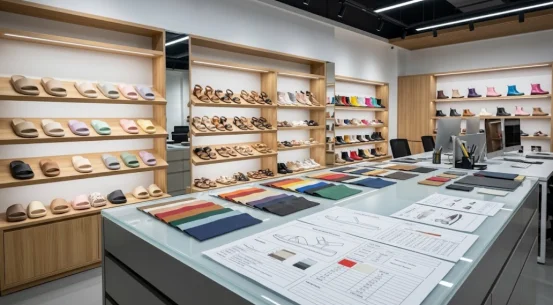
What Should You Define Before China Fashion Footwear Sourcing?
Put your sales plan on one page before contacting factories. A supplier can quote faster when the brief has real details, not just “trendy sandals.”
Set the Product Brief
State the customer, season, use case, size range, colors, target price and expected order quantity. For summer lines, note whether the shoe is for commuting, beach use, indoor wear or work floors. A deep anti-slip outsole matters far more for a workshop buyer than for a resort boutique.
Check Materials and Fit
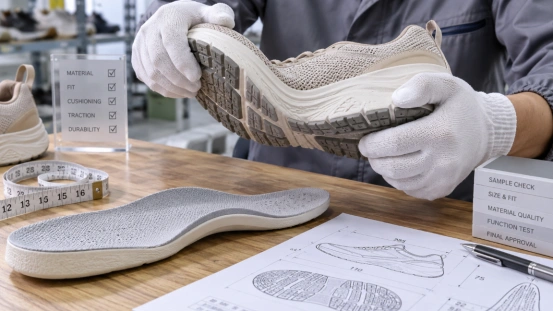
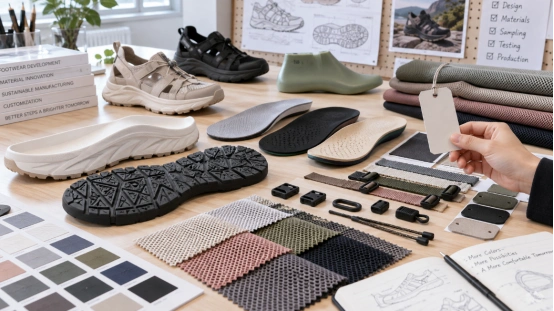
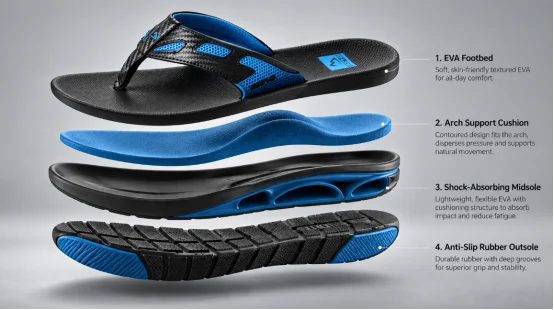
Ask for the upper, lining, midsole and outsole materials in writing. EVA gives light weight and cushioning, while rubber offers a different grip and wear profile. Request a size chart in the system used in your market, then ask for a physical sample. Photos rarely show toe-room, strap pressure or sole flexibility.
How Do You Choose Fashion Footwear Suppliers in China?
Supplier choice is a risk decision. A low quote means little if the factory cannot repeat the approved sample or pack mixed sizes correctly.
Verify Factory Capability
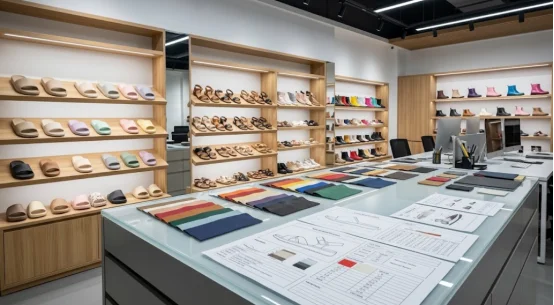
Ask whether the supplier handles men’s, women’s or kids’ footwear, and whether it accepts OEM footwear manufacturing or private label footwear work. Check the production line, sample room and packing area when possible. A useful footwear sourcing agent can arrange factory visits, interpretation and a record of item number, size, color, quantity and carton volume.
Review MOQ, Samples and Timing
Small trial orders help you test sell-through before a full container. Confirm footwear MOQ and lead time for stock colors, custom colors, printed or embossed logos, hangtags and shoe boxes. Approve a pre-production sample that shows strap comfort, sole texture, logo position and packaging. Keep that sample as the reference for final inspection.
Compare the Total Landed Cost
Add product price, sample fees, inland transport, inspection, export cartons, duty, freight and destination charges. Mixed-size packing can improve inventory balance. Consolidating orders from several factories may also lower the cost per shipment, even when one item has a slightly higher unit price.
Which Fashion Footwear Categories Work Well for Wholesale?
Different categories solve different retail problems. Match the construction to the shelf, the climate and the buyer’s daily routine.
EVA Sandals and Slides
EVA sandals wholesale buyers often look for light cartons, easy cleaning and repeatable sizing. A thickened, wear-resistant EVA sole can suit daily commuting, workplace duty, beaches and indoor use. Double hook-and-loop straps adjust to different foot widths, and a textured outsole adds grip on wet ground. Full EU men’s sizes from 38 to 45, with mixed-size ratios, make a practical opening order.
Kids’ Boots and Sandals
For toddlers, fit and stability come first. High-top ankle boots with a roomy round toe, elastic knit collar, adjustable laces and a thick non-slip rubber outsole support active walking in kindergartens, homes and parks.
Girls’ sandals with a Velcro ankle strap, breathable lining and a flexible rubber sole cover spring and summer occasions. Ask for age-appropriate size ranges, such as EU 21 to 32 for boots and EU 22 to 33 for sandals.
Seasonal and Private Label Collections
Retailers can combine core neutral colors with a few market-specific shades. Custom logo shoes may use screen printing, heat transfer, embossing or woven labels. Strap width, sole thickness, hangtags and carton printing can be adjusted in a private label footwear program. Keep changes limited on the first run. Every extra component adds a new point to inspect.
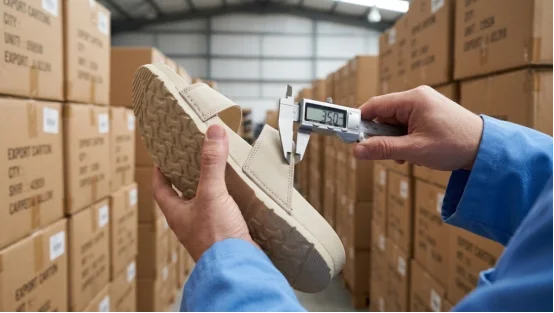
How Do You Control Footwear Quality Before Shipment?
Quality control works best as a sequence, not a final surprise. Tie every check to the approved sample and your written order sheet.
Inspect During Production
Check incoming materials, color consistency, bonding, stitching, strap attachment and outsole texture. For children’s shoes, inspect sharp edges, loose decorations and lace hardware. A professional QC team can send progress updates and flag a deviation while there is still time to correct it.
Complete a Pre-Shipment Check
Use a sample-based inspection for size, color, logo, pair matching, carton marks and quantity. Photograph defects and record carton numbers. Independent footwear factory inspection is useful even when another factory placed the order. The report should state what was checked, the defect level and the agreed action.
Protect the Cargo
Moisture-proof OPP bags, reinforced export cartons and optional shoe boxes help shoes survive long sea routes. Confirm carton dimensions and CBM before booking. Warehouse storage and mixed container loading can combine products from different regions into one export shipment, with documents prepared for customs clearance.
What Shipping Plan Fits Your China Footwear Order?
Choose transport after the order is stable. Sea freight suits larger seasonal buys. Sea-rail combinations can help when inland timing or destination connections make a direct route awkward. Your shipping plan should include cargo insurance, export documents, bill of lading handling and the import papers required in your country.
Order tracking matters here. A sourcing partner can follow production, receive goods into a Yiwu warehouse, inspect them, consolidate cartons, transfer supplier payments and book space with established freight forwarders. You get one contact for several factories, which is handy when a launch date is already printed on the sales calendar.
Where Can XINSA Fit Into Your Import Process?
Once your product brief is clear, XINSA can match footwear requests with qualified manufacturers across China. Its scope covers men’s, women’s and kids’ styles, including slippers, slides, sandals and children’s boots. The service includes sample coordination, custom colors, mixed-size ratios, logo and label work, strap or sole adjustments, and export packaging.
The practical value sits in the handoffs. XINSA records order details with photos, follows production, arranges pre-shipment QC and stores goods in its own warehouse. Orders from multiple suppliers can be consolidated and loaded together.
Sea, air and sea-rail options, customs declarations and destination import documents are handled within the same export workflow. Small and trial orders are accepted, while OEM and ODM projects remain available for buyers testing a new collection. Product examples and inquiry routes are listed at XINSA products and the XINSA home page.
FAQ
Q1: What is a sensible first order for China fashion footwear sourcing?
A: Start with one or two styles, proven colors and a controlled mixed-size ratio. Use the trial order to test fit, packaging and sell-through before adding custom components.
Q2: How can you lower footwear sourcing risk?
A: Define materials and sizes in writing, approve a pre-production sample, track production and complete an independent or supplier-led pre-shipment inspection.
Q3: Can several footwear factories ship in one order?
A: Yes. Warehouse consolidation and mixed container loading can combine cartons from different suppliers and simplify export paperwork.
Q4: What details should a custom logo shoe order include?
A: Provide logo artwork, position, print or emboss method, colors, size ratio, hangtag data, carton marks and packaging dimensions. Approve a physical sample before bulk production.
Q5: Which materials are common for fashion footwear?
A: EVA is common for lightweight sandals and slides. PVC, PU, mesh, cotton fabric and rubber are also used across uppers, linings, midsoles and outsoles, depending on the style and use.